By Rakesh Bhawsar
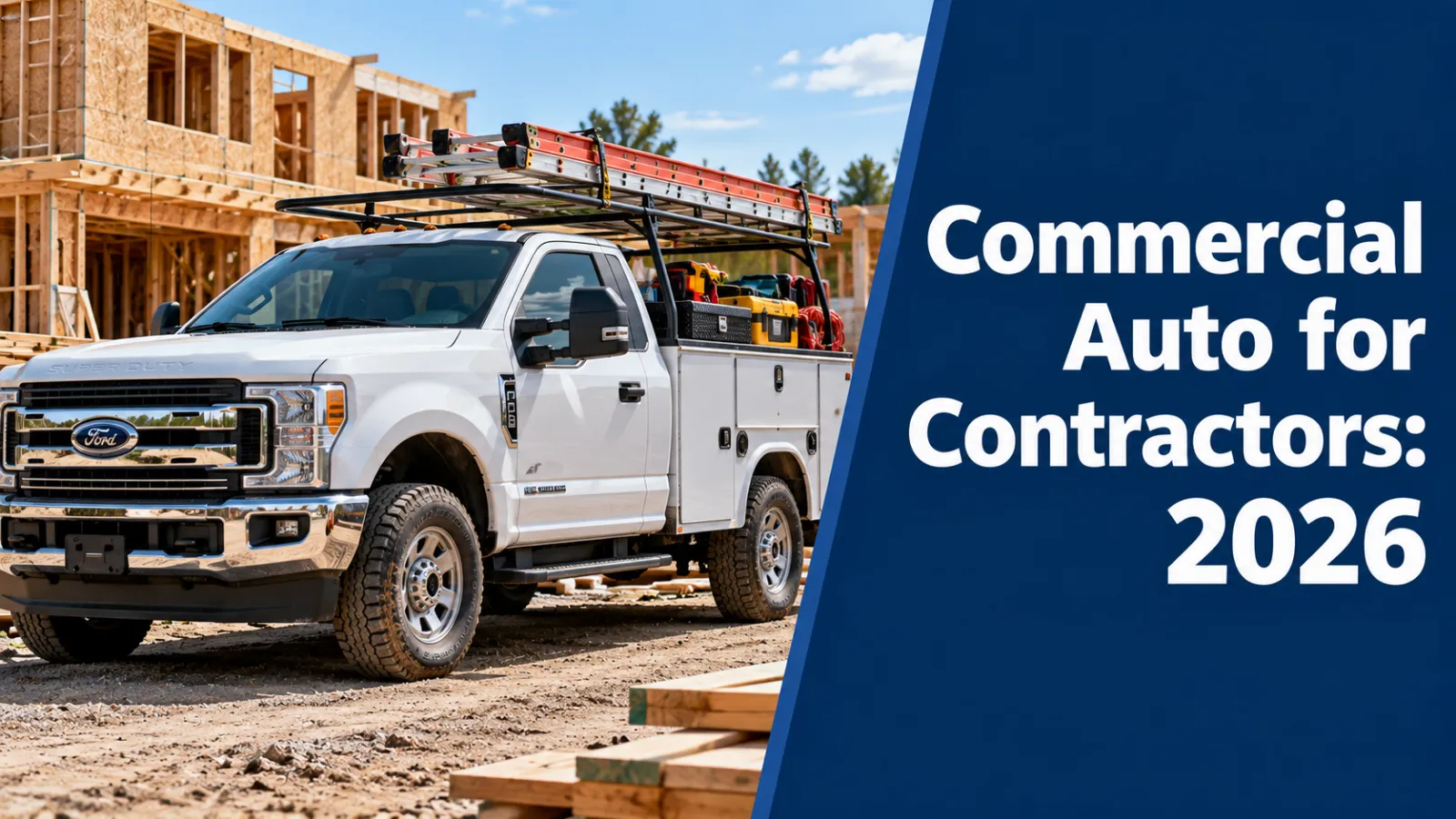
“In my experience working with general contractors and tradesmen, I’ve seen a lot of expensive mistakes. The most common one? A contractor uses their personal Ford F-150 for work, gets into an accident on the way to a job site, and their personal auto insurance denies the claim. The insurance company sees the ladder racks, the tools in the bed, and the business logo—and they classify it as commercial use. If you don’t have commercial auto insurance, you are paying for that accident out of your own pocket.”
Short Answer: Commercial auto insurance is essential for contractors who use a vehicle for business. Personal auto policies exclude business use. In 2026, most contractors pay between $1,200 and $3,000 per year per vehicle for commercial auto coverage. If you have employees who drive their own cars for your business, you also need Hired and Non-Owned Auto (HNOA) coverage.
If you are a contractor, electrician, plumber, or builder, here is exactly what you need to know to protect your vehicles and your business in 2026.
Why Your Personal Auto Policy is Not Enough
Many contractors think: “I’ve had my personal auto policy for 10 years, they will cover me.” They won’t.
Standard personal auto policies have a “business use exclusion.” If you use your truck to haul materials, tow a trailer, or drive to client sites, your personal policy will likely deny the claim in an accident.
You need Commercial Auto if:
- The vehicle is titled in your business name.
- You use your personal truck for work (hauling tools, towing trailers, or driving to job sites).
- You have employees who drive for the business.
(If your business is based out of your home, check out Home-Based Business Insurance: Do You Need It? to ensure your home office is also covered.)
How Much Does Commercial Auto Cost for Contractors in 2026?
“The cost of commercial auto depends heavily on what you are hauling and where you park it. A plumber’s van costs less to insure than a roofer’s truck loaded with heavy equipment.”
Here is a realistic breakdown for 2026:
| Contractor Type | Average Annual Commercial Auto Cost | Why? |
|---|---|---|
| General Contractor (Pickup Truck) | $1,200 – $2,000 | Standard risk, mostly hauling tools. |
| Plumber / Electrician (Cargo Van) | $1,500 – $2,500 | Vans carry expensive equipment. |
| Roofer (Heavy Truck/Trailer) | $2,000 – $3,500+ | High risk, heavy loads, ladder racks. |
| Landscaper (Truck + Trailer) | $1,800 – $3,000 | Towing adds significant liability. |
Pro Tip: If you are towing a trailer (like a mobile office, heavy equipment trailer, or food trailer), make sure your policy specifically covers towing liability. Read our guide on Food Trailer Insurance: Cost & Requirements for 2026 to see how trailer coverage works.
What About Your Tools Inside the Truck?
Commercial Auto does NOT cover your tools.
If your van is broken into and $5,000 worth of power tools are stolen, your auto policy won’t pay for them. To cover your tools and equipment, you need Inland Marine coverage or a Commercial Property policy.
If you run a larger operation with multiple trucks, check out our guide on Fleet Vehicle Insurance: Cost & Requirements for Small Businesses.
Do You Need Workers Comp for Drivers?
Yes. If you have employees driving your trucks, they are covered under your Workers’ Comp policy if they get injured in an accident.
The rules vary by state:
- In Ohio, you must buy Workers’ Comp through the state BWC if you have even one employee. Read our guide on Small Business Insurance in Ohio: Cost & Requirements (2026).
- In Texas, it is optional for most, but highly risky. Read our guide on Does a Texas Plumber with 1 Helper Need Workers Comp?.
FAQ: Contractors Ask, I Answer
Q: Can I just add a “business use” endorsement to my personal auto policy?
A: Sometimes, yes. If you are a sole proprietor with one truck, a commercial endorsement might be enough. But if you have employees or tow heavy trailers, a full commercial auto policy is safer and offers better limits.
Q: What is Hired and Non-Owned Auto (HNOA)?
A: If your employees use their personal cars to pick up parts or visit clients, HNOA covers your business if they get into an accident while working for you.
Q: Does commercial auto cover the other driver if I cause an accident?
A: Yes. Commercial auto includes liability coverage, which pays for the other driver’s medical bills and vehicle damage.
Q: I am a contractor and I work in multiple states. Will my policy cover me?
A: Most commercial auto policies cover you in all 50 states, but you must tell your agent your operating radius. If you cross state lines frequently, you might need specific interstate coverage.
Final Word
As a contractor, your truck is your lifeline. It gets you to the job, carries your tools, and represents your business.
Quick recap:
- Personal Auto: Does NOT cover business use.
- Commercial Auto: Required for work trucks and vans ($1,200-$3,000/year).
- Inland Marine: Required to cover the tools inside the truck.
- Workers’ Comp: Required for employee drivers.
Don’t let an uninsured accident stop your business in its tracks.
Related Articles
- Contractor Liability Insurance Cost in 2026: What General Contractors Really Pay
- Fleet Vehicle Insurance: Cost & Requirements for Small Businesses
- Builders Liability Insurance: Cost & Coverage for 2026
- Small Business Insurance in Ohio: Cost & Requirements (2026)
- Does a Texas Plumber with 1 Helper Need Workers Comp?
3 thoughts on “Commercial Auto Insurance for Contractors: What You Need to Know in 2026”