By Rakesh Bhawsar
“When a business owner buys their second or third van, they usually just call their agent and say, ‘Add another car to my policy.’ This is a costly mistake. Once you have multiple vehicles, personal auto policies won’t cut it—you need a dedicated Fleet policy. I’ve seen owners save thousands by structuring this correctly.”
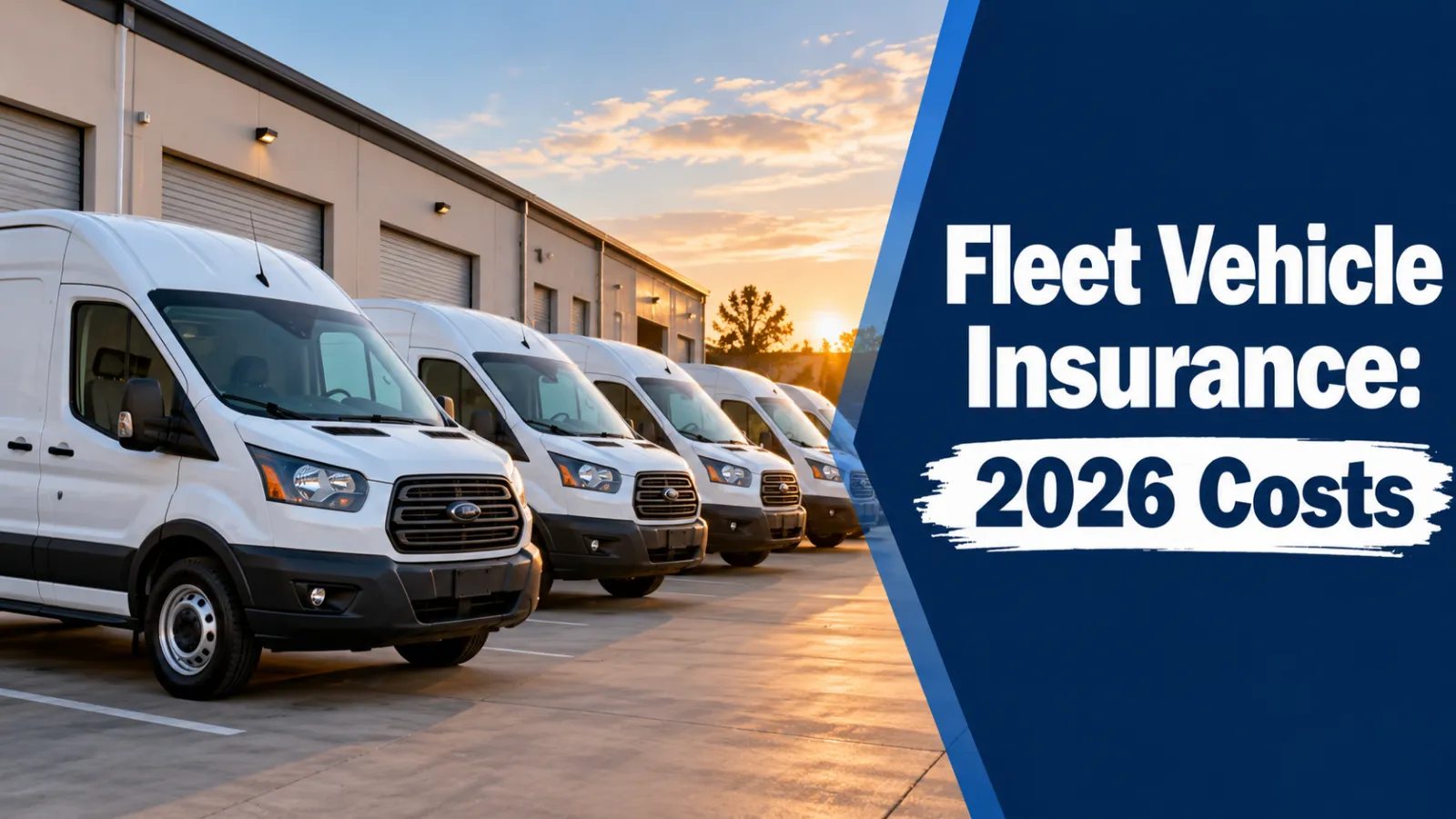
Short Answer: Fleet vehicle insurance is a single commercial auto policy that covers two or more vehicles owned by a business. In 2026, most small businesses pay between $1,500 and $3,500 per vehicle, per year. Bundling multiple vehicles into one fleet policy is usually cheaper than buying separate policies for each vehicle, and it offers broader coverage for employees driving company cars.
If your business is growing and you now have multiple trucks, vans, or cars, here is exactly how fleet insurance works in 2026.
What Qualifies as a “Fleet”?
You don’t need 50 semi-trucks to have a fleet. In the insurance world, a fleet is generally defined as two or more vehicles used for business purposes.
These can include:
- Cargo vans for deliveries.
- Pickup trucks for contractors.
- Sedans for sales reps or consultants.
- Heavy trucks for logistics.
Why get a fleet policy instead of individual policies?
- Cost Savings: Insurers offer a “fleet discount” because managing one policy for 5 vehicles is less administrative work for them than managing 5 separate policies.
- One Renewal Date: All your vehicles renew on the same day, making accounting easier.
- Shared Limits: If one vehicle exhausts its liability limit, some fleet policies allow the coverage to be shared across the fleet.
(If you only have one vehicle, you don’t need a fleet policy. Read our guide on Vehicle Business Insurance: Commercial Auto Cost & Rules (2026) instead.)
How Much Does Fleet Insurance Cost in 2026?
“The price of a fleet policy depends heavily on the drivers, not just the trucks. One driver with a DUI will spike the premium for the entire fleet.”
Here is a realistic breakdown for a small business fleet:
| Fleet Size | Average Annual Cost (Per Vehicle) | Total Estimated Annual Cost |
|---|---|---|
| 2-3 Vehicles | $1,500 – $2,500 | $3,000 – $7,500 |
| 4-6 Vehicles | $1,300 – $2,200 | $5,200 – $13,200 |
| 7-10 Vehicles | $1,200 – $2,000 | $8,400 – $20,000 |
Pro Tip: The type of vehicle matters. A fleet of heavy box trucks will cost significantly more to insure than a fleet of standard sedans. If you haul heavy freight, check out our guide on Trucker Liability Coverage: What You Need in 2026.
Do You Need Workers Comp for Fleet Drivers?
Yes. If you have employees driving your fleet vehicles, they are covered under your Workers’ Compensation policy if they get injured in an accident.
If you don’t have Workers’ Comp, you are personally liable for their medical bills and lost wages. The rules vary heavily by state.
- In Ohio, you must buy it through the state BWC if you have even one employee. Read our guide on Small Business Insurance in Ohio: Cost & Requirements (2026).
- In Texas, it is optional but highly risky. Read our guide on Does a Texas Plumber with 1 Helper Need Workers Comp?.
If you want to understand how liability protects your business beyond just vehicles, read General Liability vs Workers Comp: What’s the Difference?.
What About Employees Using Their Own Cars?
If your employees use their personal cars for business errands, you need Hired and Non-Owned Auto (HNOA) coverage. A fleet policy usually includes this, but you must verify it with your agent. If an employee causes an accident in their own car while working for you, HNOA protects your business from being sued.
FAQ: Business Owners Ask, I Answer
Q: Can I add a new vehicle to my fleet policy mid-year?
A: Yes. Most fleet policies allow you to add a new vehicle as soon as you buy it. You just need to notify your agent within a certain timeframe (usually 30 days).
Q: Does fleet insurance cover the tools inside my vans?
A: No. Auto insurance only covers the vehicle itself. To protect the equipment, tools, or inventory inside your vans, you need Inland Marine coverage or a Commercial Property policy.
Q: I run a moving company. Is fleet insurance different for me?
A: Yes. Moving companies have higher risks because they are hauling customer goods. You need cargo insurance in addition to your fleet policy. If you are in the food business and towing trailers, read Food Trailer Insurance: Cost & Requirements for 2026.
Q: Can I put my personal car on my business fleet policy?
A: Sometimes, but it’s not recommended. It blurs the lines between personal and business use, which can cause claim issues.
Final Word
If your business relies on vehicles, a fleet policy is the most efficient way to protect them.
Quick recap:
- Fleet: 2 or more business vehicles.
- Cost: $1,500 to $3,500 per vehicle, per year.
- Coverage: Commercial auto, plus HNOA for employee personal cars.
- Add-ons: Inland marine for tools, Workers’ Comp for drivers.
Don’t let one uninsured vehicle put your entire fleet at risk.
Related Articles
- Trucker Liability Coverage: What You Need in 2026 (Cost & Rules)
- Vehicle Business Insurance: Commercial Auto Cost & Rules (2026)
- Small Business Insurance in Ohio: Cost & Requirements (2026)
- Food Trailer Insurance: Cost & Requirements for 2026
- General Liability vs Workers Comp: What’s the Difference?
3 thoughts on “Fleet Vehicle Insurance: Cost & Requirements for Small Businesses”